
providing quality care with patient

This is a great site for everything around the home, and it also has a useful beauty section. You can see the best products in each category and they even have test results to back up the information they are giving you.

Call now

+088 4584 6845 4578

    Our advantages

    5

    CITIES PRESENCE

    44

    YEAR EXPERIENCE

    1000+

    GOOGLE REVIEW

    About Us

    Great Smile. Build Valuable Relationships With Patients

    Inspiring greatness goes beyond what we do in our office. Our team is proud to support local schools and give back to our community through active involvement, scholarships, and charity work – so that we can create even more smiles across Western North Carolina!

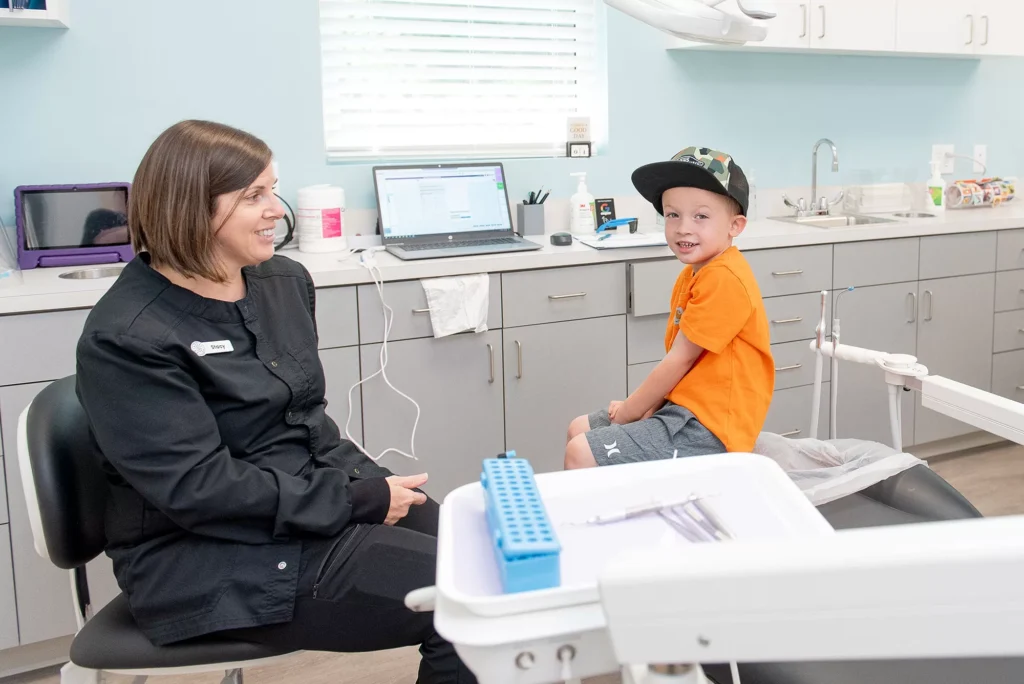
    We’re inspiring everyone in our community to be their best selves, one smile at a time. Our secret is keeping incredible care, wall-to-wall positivity, and great vibes at our core, from start to finish. At Great Smiles, healthy teeth come with a helping of awesome memories and a lot of fun!

    Service

    High Quality Service For You

    Cavity Protection

    Implant Dentistry

    Cosmetic Dentistry

    Teeth Cleaning

    Babys First Visit

    Frenectomies

    Teeth Gaps

    Crowded teeth

    WHY CHOOSE US

    Quality dental care

    Excellence care

    Confidentiality

    24/7 emergency service

    Best Preventive dentistry

    Advanced treatment

    Time flexibility

    Amenities

    Our licenses and certificates

    Demo Certificate

    Demo Certificate

    Demo Certificate

    Demo Certificate

    Pediatric Dentist Treatments

    Preventive Treatments

    Sealants
    Sealants are a super simple way to protect teeth and keep away decay. Sealants are applied to the chewing surfaces of the teeth and generally last about 3 to 5 years. For the best results, stay away from chewing ice or hard candy!

    Fluoride
    Fluoride is a substance that helps teeth remineralize and resist decay. Regularly drinking fluoridated water, when combined with proper brushing and flossing, can significantly lower your risk for tooth decay. Pediatric dentists can evaluate the level of fluoride in a primary drinking water source and recommend fluoride supplements (usually in tablets or drops), if necessary.

    Restorative Treatments

    Fillings
    Silver and tooth-colored fillings repair damaged teeth and spots where cavities have cropped up. When tooth decay does happen, we make sure to clean out the bad stuff and restore the tooth with a filling to keep it looking good and feeling strong.

    Pulpotomy
    Sometimes, our young patients will need a pulpotomy (also called a root canal) for major decay or an injury. Don’t worry – we can remove the pulp and preserve the tooth, all while making sure that your child is relaxed and comfortable during the procedure.

    Additional Treatments

    Extractions
    While extractions are a last resort, they can be necessary for orthodontic and dental care reasons, like helping tooth alignment. If we have to take out a primary tooth, we’ll use a space maintainer to make sure everything stays in the right place!

    Space Maintainers
    If a tooth is removed early, a space maintainer makes sure that there’s plenty of room for the permanent tooth to join the party. Without a space maintainer, teeth on either side can interfere with the new tooth – which is no fun for anyone!

    During Your First Visit

    When you visit us for the first time, we’ll take a look at your little one’s teeth, do a frenectomy evaluation, and go over important info for your child’s diet, snacking, and dental care. And we’ll do it all with great vibes only! Your first visit is all about making sure that your little one has a good time – after all, we want to show them that this is a fun place to hang. No matter their age, your kid should smile before, during, and after every future visit.

    How Lip/Tongue Ties Affect Small Smiles

    When lip ties and tongue ties are left untreated, it’s no joke. Babies, toddlers, and older children can struggle with speech problems, poor nutrition, colic, reflux, drooling, sleep apnea, and tooth decay. Moms and babies show early signs of lip/tongue tie issues – keep an eye out for difficulties breastfeeding, poor weight gain, upper lip blistering, poor milk transfer, and long feeding times. Moms may also notice nipple trauma, painful breastfeeding, infected nipples, mastitis, and more nursing issues.

    The Frenectomy Procedure

    Doing great things for you and your child means using the best tech and procedures available – especially with frenectomies. At Great Smiles, we use a specialized CO2 laser to perform frenectomies, so that moms and children can enjoy an easier time during and after surgery. What makes the CO2 laser the best is that it is the safest, least painful, most precise, and simplest option. Not only will babies and toddlers have less scar tissue and an easier recovery period, but moms will be able to avoid the post-op nursing complications of other procedures.

    Frenectomies make an incredible difference for parents and children, so don’t hesitate to talk to us about how a frenectomy could help your family.

    How Great Smiles Stay Strong

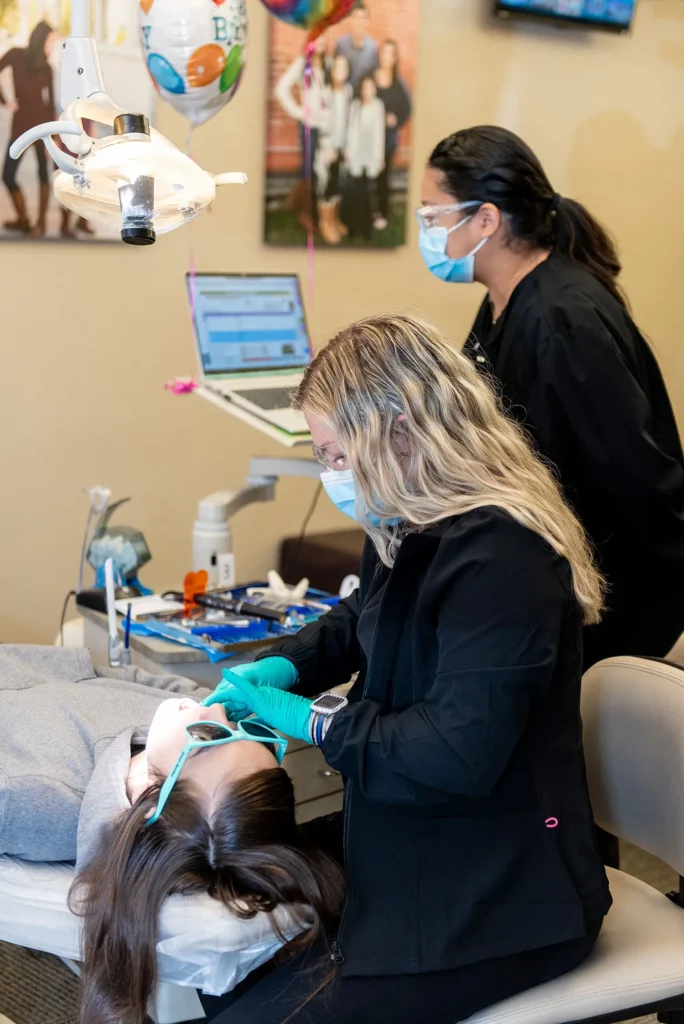
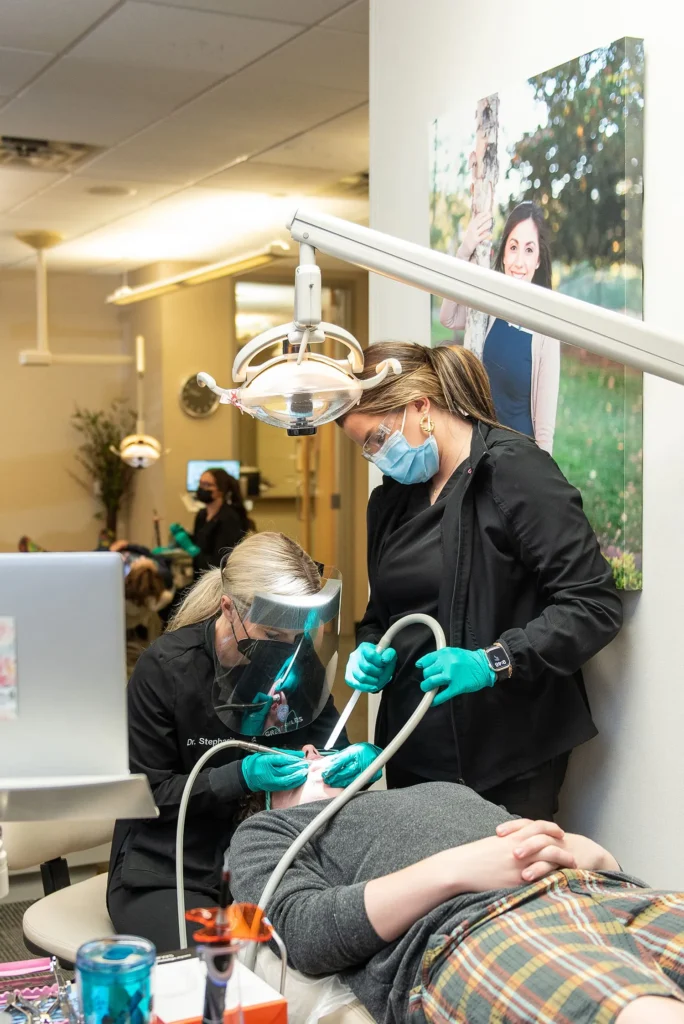
    Comprehensive care is at the core of Great Smiles. That’s why we offer a wide variety of dental services for children – so you always know that we have a solution to get your kid back on track for a healthy smile! Take a look at everything we offer for awesome care.

    What do pediatric dentists do?

    Pediatric dentists offer a wide range of treatments for children’s oral health, from preventive care like cleanings and fluoride to restorative treatments like fillings and crowns. They can also address orthodontic problems, manage gum disease, and care for dental injuries.

    What Exactly is a Frenectomy?

    Your lips and tongue are connected to your mouth by a small band of tissue. Sometimes, this tissue develops abnormally, leading to problems for babies and children. A simple but very specialized procedure called a frenectomy can restore function and fix issues caused by lip and tongue ties. Frenectomies can’t be performed by just anyone – Dr. Bill and Dr. Stephanie have specialized training and education that makes them uniquely qualified to perform this procedure!

    Emergency? We’ve Got Your Back

    Kids will be kids, and that means they just can’t help getting into trouble sometimes. Accidents happen, and we’re here to help in case you’ve got a dental emergency on your hands. If your child or teen needs emergency dental care right now, call our office as soon as possible.

    Orthodontics Dentist Treatments

    What is orthodontics

    In simpler terms, orthodontics is a branch of dentistry that focuses on straightening teeth and aligning your bite.
    Here are some of the conditions orthodontics can address:


    • Crooked teeth
    • Crowded teeth
    • Gaps between teeth
    • Overbites
    • Underbites
    • Crossbites

    There are many different orthodontic treatments available in 2 phases, including traditional braces, clear aligners, and retainers. The best treatment for you will depend on your individual needs.

    Orthodontics is a dentistry branch that corrects misaligned teeth and bites. An orthodontist for children is a dentist with extra training to handle these issues. They create personalized treatment plans to achieve the best smile for each child, considering both the teeth and facial features.

    Orthodontists can treat people of all ages, including those with special needs, and work alongside other dental specialists to provide comprehensive care.

    Phase I Treatment

    We think of braces as a teen thing, but that’s just not true. When your child starts developing their smile, Phase I treatment can make sure that you’re taking all the steps for great tooth and jaw growth. Early treatment can create room for crowded teeth, reduce tooth removal, adjust jaw growth, and more.

    Between the ages of 7 and 10, our orthodontists for children will closely monitor your child’s smile to catch signs of early issues and prevent bigger problems later. Sometimes, treatment isn’t necessary – but we still want to keep an eye on your child’s smile just in case!

    Phase II Treatment

    After Phase I, we check in on how your child is doing and let their permanent teeth come in. If any orthodontic issues pop up, we treat them with comprehensive orthodontic care. If your kid has completed Phase I with us, we’ll have tons of great documentation about their dental history to create the perfect treatment plan. The result? An incredible smile!

    Awesome Smiles Start Here with braces for teens

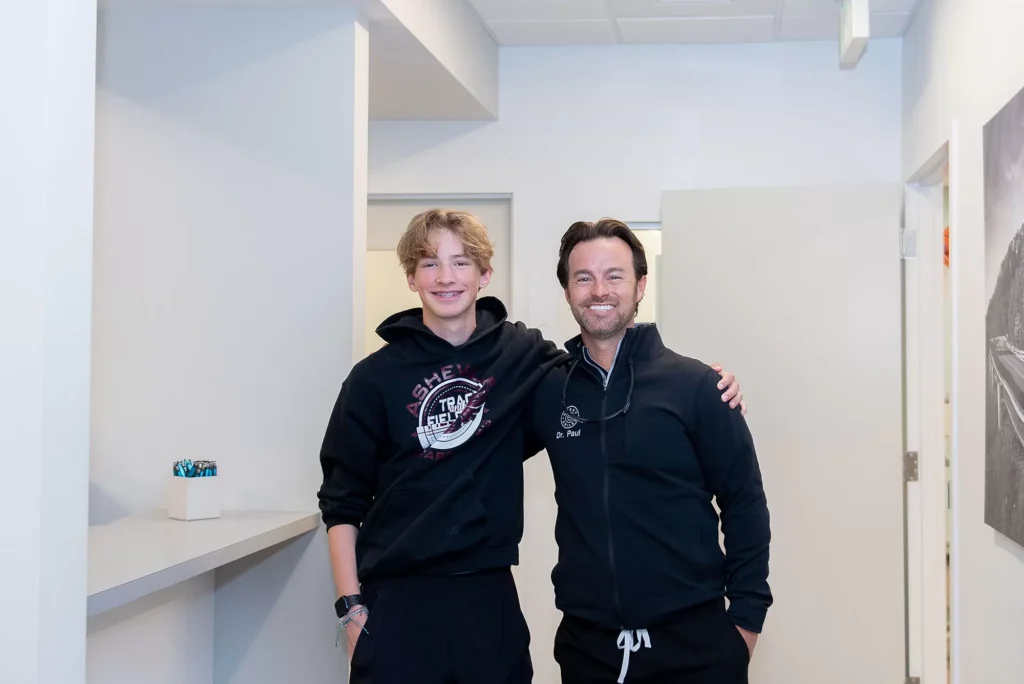
    Setting your teen up for a lifetime of healthy, happy smiles means correcting issues now using braces for teens, not later. Between the ages of 12 and 16 is the perfect time to check in with our team and see if braces or Invisalign are in your future. We want to make sure that your kid is on the right path to a confident smile – bring them in for a complimentary evaluation so we can say hello!

    Teenagers are at a prime age to address common orthodontic for teens problems with braces for teens. Issues like bite problems, gaps between teeth, and crowded or crooked teeth can be easily corrected during this time. Early intervention with braces for teens sets your child up for a lifetime of better oral health and a confident smile.

    At GreatSmiles, we understand that every teen’s smile is unique. That’s why we offer a variety of orthodontic treatment options to achieve the best results with different types of braces. Here’s a look at some of the options we provide:

    What the Typical Time for Braces for Teens?

    Typically, the best time for a teen to get braces is when:

    • All of the permanent teeth have grown in
    • Dental crowding, bite issues, or alignment issues are evident

    While braces are appropriate for adults as well, the most common ages for braces is during the teen years between 10 and 14 years of age. The average treatment time for braces is between

    16 – 24 months, but this can depend on the issues being addressed and the types of braces chosen .

    What are adult braces?

    Unlike the metal braces of childhood, adult braces offer a range of discreet and comfortable options designed for your busy lifestyle. These address the common concerns adults have about orthodontic treatment.

    What are braces in general?

    Dental braces are devices used to gradually apply gentle pressure on your teeth, slowly shifting them into a more optimal position. This improves not only the aesthetics of your smile but also the function of your teeth, making it easier to bitechew, and speak.

    Do I Need Orthodontic Treatment?

    While a beautiful smile is a great benefit, adult braces offer more than just cosmetic improvements. Here’s how orthodontic treatment can address functional concerns you might not even realize:

    • Improved Bite Function: Misaligned teeth can make chewing difficult and inefficient. Braces can correct bite issues, leading to better chewing and potentially reducing stress on your jaw joint.
    • Enhanced Speech Clarity: Certain teeth misalignments can affect speech patterns. Braces can help improve your speech clarity and pronunciation.
    • Easier Oral Hygiene: Straight teeth are easier to clean, reducing the risk of tooth decay and gum disease.
    • Reduced Jaw Pain: Misaligned bites can contribute to jaw pain and headaches. Braces can help alleviate these issues.
    • Boosted Confidence: Finally, a straighter smile can significantly improve your confidence and self-esteem.

    If you experience any of these concerns, scheduling a consultation with an orthodontist can help determine if adult braces are right for you.

    What to Do in the Meantime

    Treating Small Smiles

    Being proud of your smile means having the confidence to share it with the world! We want your child to be inspired to be their best and do great things – and that starts with building their dream smile with treatment that’s as quick and simple as it can be. We focus on care that’s comfortable, compassionate, and kind at its core, in a space that inspires great vibes and wall-to-wall smiles.

    Traditional Braces

    Traditional braces are one of the most common solutions for transforming smiles – and now, they’re more comfortable and customizable than ever before!

    Clear Braces

    Did you know that braces can be low-profile and stylish? It’s true! With clear braces, tooth-colored elastics and wires can help your kid feel more comfortable and confident in their smile during their entire treatment!

    Appliances

    Orthodontics for kids involves more than just braces. Additional orthodontic appliances, like retainers or spacers, can help keep everything in order while your little one grows into their smile.

    Invisalign™

    If you want orthodontics on the down-low, Invisalign is the smile solution you need. These removable aligners are pain-free, virtually invisible, and comfortable as ever! Don’t shake up your routine or throw out your favorite snacks – Invisalign makes treatment feel like a breeze.

    Clear Braces

    Sure, we have traditional braces – but you may not want all that metal hanging out while you’re transforming your smile! Clear braces are the go-to for our adult patients who want to feel inspired during and after treatment. Customize your look or keep it low-profile with tooth-colored wires and elastics.

    Retainers

    To keep your smile looking its best, your retainer will be your lifelong friend. We have a variety of retainers available to fit your needs and keep teeth straight after your orthodontic treatment is complete, including clear and lingual-bonded retainers.

    CUSTOMER REVIEWS

    4.9
    Based on 1009 reviews
    powered by Google
    Cambrie
    20:37 19 Jun 24
    Stacy did a great job
    Ashlynn Kurle
    14:42 19 Jun 24
    stacy did a great job!
    Jessica Spence
    12:53 17 Jun 24
    We’ve had over a decade of positive experiences at Great Beginnings. All four of my kids have seen Dr. Doug over the years. I love that they can all be seen on the same day! Most recently we had Veronica, Peyton, Cam and Theresa for our cleanings and they were all great!
    Colin Logan
    19:25 13 Jun 24
    Stacy was nice and was very positive and helped me have a positive view on an upcoming camp.
    Arthur Hall
    19:51 10 Jun 24
    Peyton was awesome!!
    Maureen Oprisko
    15:44 06 Jun 24
    Ms. Veronica has been helping my son with his teeth for a few years now. Even though they see each other every six months or so, she has taken the time to get to know him, help him become comfortable, and ease him into not being fearful of the dentist. I highly recommend her, and her amazingness. Thank you Ms. Veronica.
    Shout out to Dr. Doug as well.
    Phil Delliveniri
    16:51 09 May 24
    Dr Doug did an amazing job with my son! Veronica was especially good wrangling my 2 year old for his cleaning. Wait time was great, all the other staff were very friendly. I highly recommend Great Smiles!
    Maya
    19:35 22 Apr 24
    Dr. Doug is fantastic- my kiddos are always happy to get their teeth cleaned there. Peyton and Veronica were also so kind, patient and thorough with their cleaning techniques and clear and calm communication when offering instructions with which to follow. Thank you for all that you offer- you’ve got a strong team!
    Kansas Maltry
    23:12 04 Apr 24
    Dr Doug and Ms Lynn are amazing! My son had his first dentist appt today at 15 months and they gave him such a great experience, which is key for his healthy dental success. Dr Doug and Lora were also amazing with my daughter! Lora was very patient and kind and happy to work through everything with her. Dr Doug is just amazing! Thankful for such a great practice for my children to go to!

    FAQ

    Four things are necessary for cavities to form — a tooth, bacteria, sugars or other carbohydrates and time. Dental plaque is a thin, sticky, colorless deposit of bacteria that constantly forms on everyone’s teeth. When you eat, the sugars in your food cause the bacteria in plaque to produce acids that attack the tooth enamel. With time and repeated acid attacks, the enamel breaks down and a cavity forms.
    A toothbrush with soft bristles and a small head, especially one designed for infants teeth, is the best choice for infants. Brushing at least once a day, at bedtime, will remove plaque bacteria that can lead to decay.
    A toothbrush with soft bristles and a small head, especially one designed for infants, is the best choice for infants. Brushing at least once a day, at bedtime, will remove plaque bacteria that can lead to decay.
    Pediatric dentists have extra training for kids’ teeth, making them the kid-friendly dentist experts. They use special tools and create a fun environment to keep your child comfortable during checkups and address any dental issues early on. For your child’s growing smile, consider a pediatric dentist!
    We invite you to stay with your child during their initial examination. After the first dental appointment, we recommend you allow our pediatric dentist staff to accompany your child through their dental experience. This will enable us to establish a close rapport with your child, gain their trust, build their confidence in us and help them overcome apprehension. Our goal is to help children develop independence and to enhance communication with the pediatric dentist and Great Smiles staff.
    Baby bottle tooth decay is a pattern of rapid decay associated with prolonged nursing. It happens when a child goes to sleep while breast-feeding and/or bottle-feeding. During sleep, the flow of saliva is reduced and the natural self-cleansing action of the mouth is diminished. Avoid nursing children to sleep or putting anything other than water in their bedtime bottle. Encourage your child to drink from a cup as they approach their first birthday. He/she should be weaned from the bottle at 12-14 months of age.
    Thumb and pacifier sucking habits that go on for a long period of time can create crowded, crooked teeth or bite problems. If they are still sucking their thumbs or fingers when the permanent teeth arrive, a mouth appliance may be recommended by your pediatric dentist. Most children stop these habits on their own.
    Sealants are clear or shaded tooth colored resin applied to the teeth to help keep them cavity-free. Sealants fill in the grooved and pitted surfaces of the teeth, which are hard to clean, and shut out food particles that could get caught, causing cavities. Fast and comfortable to apply, sealants can effectively protect teeth for many years.
    Parents should use a tiny smear of fluoride toothpaste to brush baby teeth twice daily as soon as they erupt. Once children are 3 to 6 years old, then the amount should be increased to a pea-size. Children should spit out and not swallow excess toothpaste after brushing.
    To comfort your child, rinse his/her mouth with warm salt water and apply a cold compress or ice wrapped in a cloth to your child’s face if it is swollen. Do not put heat or aspirin on the sore area, but you may give the child acetaminophen for pain. See one of our pediatric dentists as soon as possible.
    Fluoride has been shown to dramatically decrease a person’s chances of getting cavities by making teeth stronger. If your child is not getting enough fluoride internally through water (especially in communities where the water district does not fluoridate the water or if your child drinks bottled water without fluoride), your pediatric dentist may prescribe fluoride supplements.
    Sore gums when teeth erupt are part of the normal eruption process. The discomfort is eased for some children by use of a teething biscuit, a piece of toast or a frozen teething ring. Your pharmacy should also have medications that can be rubbed on the gums to reduce the discomfort.
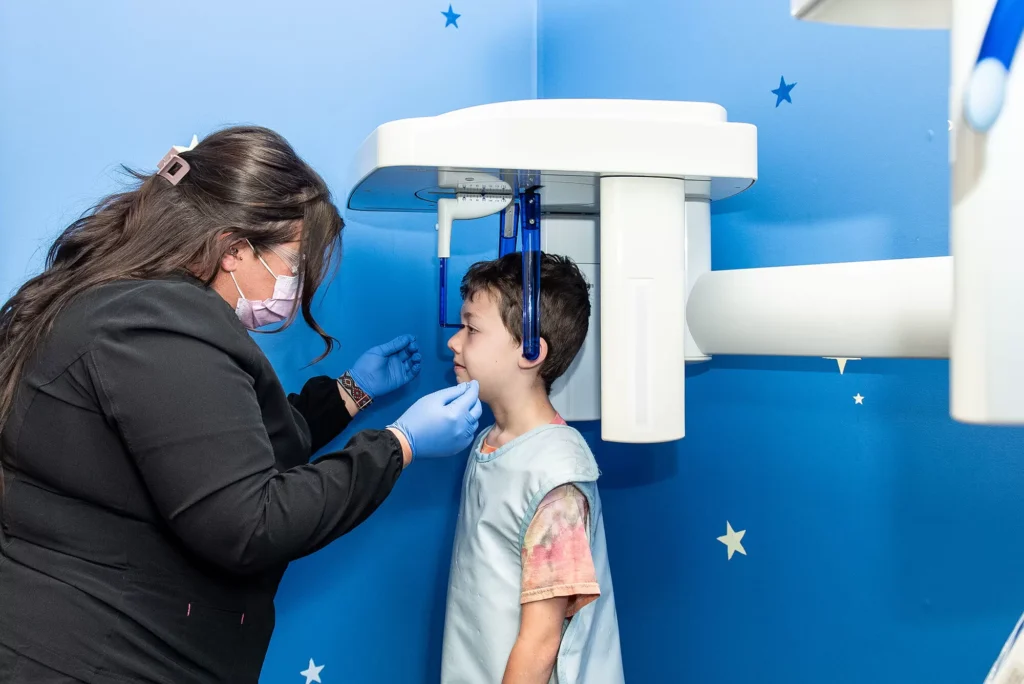
    With contemporary safeguards, such as lead aprons and high-speed film, the amount of radiation received in a dental x-ray examination is extremely small. Even though there is very little risk, pediatric dentists are particularly careful to minimize the exposure of child patients to radiation. In fact, dental x-rays represent a far smaller risk than an undetected and untreated dental problem.
    Usually, the space will close in the next few years as the other front teeth erupt. During your child’s next visit, we can determine whether there is cause for concern.
    A mouth guard should be a top priority on your child’s list of sports equipment. Athletic mouth protectors, or mouth guards, are made of soft plastic and fit comfortably to the shape of the upper teeth. They protect a child’s teeth, lips, cheeks and gums from sports-related injuries. Any mouth guard works better than no mouth guard, but a custom-fitted mouth guard fitted by one of our pediatric dentists is your child’s best protection against sports-related injuries.
    Primary, or ‘baby,’ teeth are important for many reasons. Not only do they help children speak clearly and chew naturally, they also aid in forming a path that permanent teeth can follow when they are ready to erupt. Some of them are necessary until a child is 12 years old or longer. Pain, infection of the gums and jaws, impairment of general health and premature loss of teeth are just a few of the problems that can happen when baby teeth are neglected. Also, because tooth decay is essentially a progressive bacterial infection, decay on baby teeth can cause decay on permanent teeth. Proper care of baby teeth is instrumental in enhancing the health of your child.
    At about 6 months, the two lower front teeth (central incisors) will erupt, followed shortly by the two upper central incisors. The remainder of the baby teeth appear during the next 18 to 24 months but not necessarily in an orderly sequence from front to back. At 2 to 3 years, all of these 20 primary teeth should be present.
    Imagine dentists like doctors. There are general doctors who can see everyone, and then there are special doctors for kids, like pediatricians. That’s what a pediatric dentist is like! They have extra training to care for children’s teeth.
    First of all, remain calm. If possible, find the tooth and hold it by the crown rather than the root. Replace the tooth in the socket and hold it there with clean gauze or a washcloth. If you can’t put the tooth back in the socket, place the tooth in a clean container with milk and take your child and the container immediately to one of our pediatric dentists. The faster you act, the better your chances of saving the tooth. Our office offers 24-hour emergency call service during the week and on the weekends.
    Pediatric dentists are like kid-tooth experts! They take care of children’s teeth from when they’re babies all the way to teenagers. They know just what to do to keep your child’s smile healthy throughout their whole childhood.
    Gear Up: Grab a soft-bristled toothbrush and a pea-sized amount of fluoride toothpaste. Brush All Sides: Tilt your brush at an angle and gently brush the front, back, and top of each tooth using small circles or back-and-forth motions. Don’t Forget the Insides: Brush the inner surfaces of your teeth too! Tongue Time: Give your tongue a brush to remove bacteria and freshen breath. Brush for Long Enough: Aim for at least 2 minutes of brushing to thoroughly clean your teeth.

    Where You Can Find Us

    Asheville

    Address

    Orthodontic Office
    10A Yorkshire St., Suite C, Asheville, NC 28803

    Pediatric Dentistry Office
    10B Yorkshire St., Asheville, NC 28803

    Hours

    Monday – Thursday: 8a – 5p
    Friday by Appointment

    Sylva

    Address

    37 Crestview Heights, Sylva, NC 28779

    Hours

    Monday – Thursday: 8a – 5p
    Friday by Appointment

    Marion

    Address

    1617 Sugar Hill Road, Marion, NC 28752

    Hours

    Monday – Thursday: 8a – 5p
    Friday by Appointment

    Waynesville

    Address

    50 Bowman Dr., Waynesville, NC 28785

    Hours

    Monday – Thursday: 8a – 5p
    Friday by Appointment

    Reynolds Mountain

    Address

    94 N. Merrimon Avenue, Suite 102, Asheville, NC 28804

    Hours

    Monday – Thursday: 8a – 5p
    Friday by Appointment